
Tension
The Second Most Important Aspect of Good Writing
This is the essay version of a talk I gave as part of being a writing mentor at Inkhaven. Please forgive me for writing about writing. The Red Heart audiobook is done, and stuck in the forever-limbo of being reviewed by the hosting platforms.
What’s the most common advice for new writers? If we set aside meta-level advice, like “Write every day,” and just think about the craft itself, I think it’s probably “Show, don’t tell,” or maybe something about brevity, like “Omit needless words,” and “Don’t waste your reader’s time.”
But, like, I’m writing words. Everything I do is tell! Are you saying I should put pictures in my stories and blog posts?
(Well, yes, but not because of “Show, don’t tell.”)
And how do I know if a word is “needless”? How the heck do I know whether I’m wasting the reader’s time? This one is especially frustrating in fiction, because, like, the whole point is to spend time in a world that doesn’t exist. From a certain perspective, all of fiction is a waste of time!
And, to make matters worse: many writers openly defy these rules and totally get away with it! Yesterday, I was talking to a resident, and he gave the example of the opening to Star Wars…
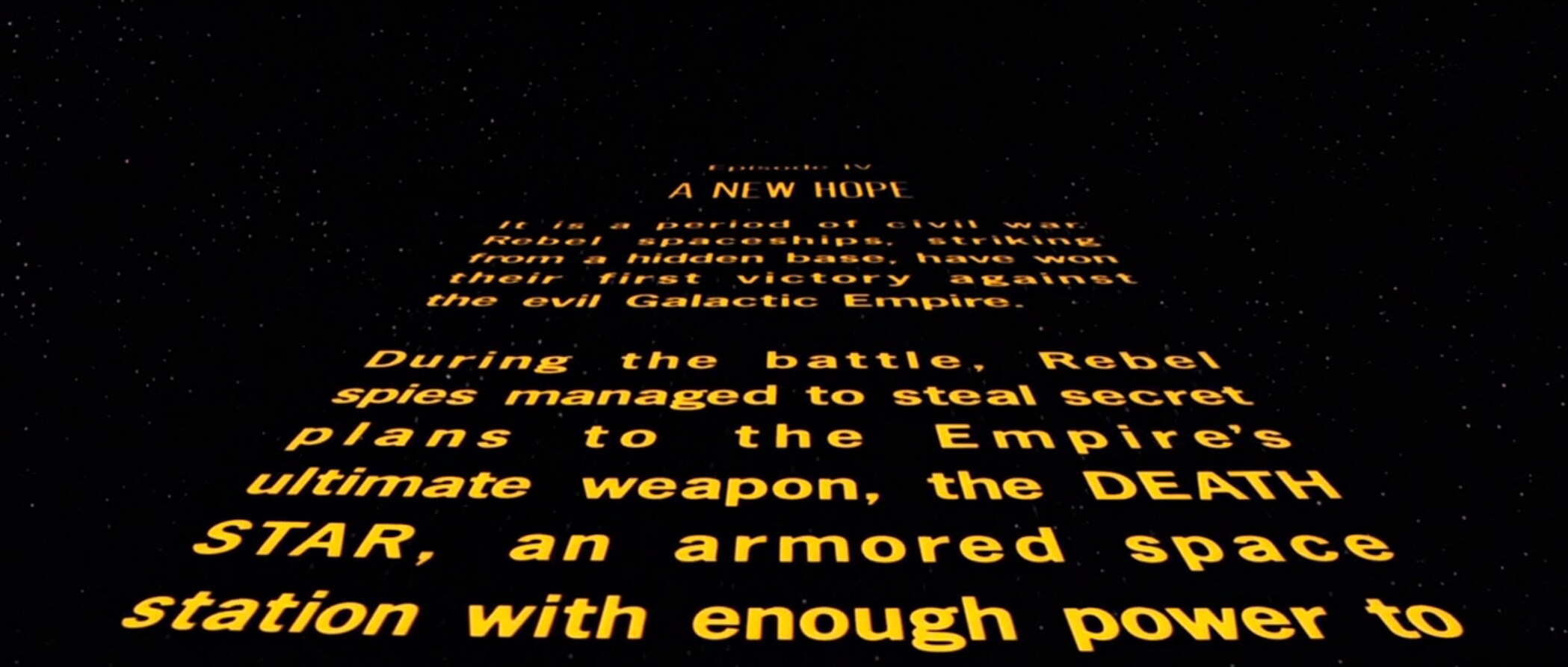
Talk about exposition dumps! This is a movie, and not a low budget one, either. A creator who was laser-focused on “Show, don’t tell” would have simply started with the space battle that immediately follows, instead of starting with literal text saying “It is a period of civil war.”1
But it totally works! The opening crawl is famous because it immediately grabs the audience. The music is a big part of this, and I think a whole essay could be written on the subtle details that the opening crawl gets right. But more plainly, notice that we are told that there are going to be REBEL SPACESHIPS and a GALACTIC EMPIRE and a DEATH STAR. And importantly, this movie came out in 1977. Most people at the time had never seen a space battle, and so while the movie is telling the audience a bunch of stuff about secret plans and hidden bases, it’s showing them that they’re in for a wild ride, unlike anything they’d seen before.
Or at least… they might be.
And this is, I think, the core genius of the title crawl: it teases the audience with the potential for something that they want, but it doesn’t outright give it to them. Not yet. Not until they know that later on there might be a DEATH STAR. Only after they know that there’s a DEATH STAR do we see the space battle between ships that aren’t the DEATH STAR.
This essay is about tension, which I believe is the second most important aspect of writing. Tension is where you promise the reader something that they want, and you show that you have it, and you keep them on edge, forcing them to read word after word, getting more desperate and hungry for the payoff with each sentence, paragraph, and page. And then you give it to them! Huzzah! The punchline! The catharsis!
But wait…
What about…
Oh no…
Because in the many words that the reader consumed, hungry for release, you subtly wove within them a new hunger, and another. Now you have your hooks in them and they can’t stop. And with each satisfying payoff they get more and more excited to read more until the climax of the story where you finally release them from the spell and they are allowed to walk away, having only just now realized that they somehow spent the entire weekend entranced.
A writer friend of mine once said that all of writing is BDSM, and all writers are dominant sadists. He was a dominant sadist, so take that with a grain of salt, but I do think it’s kinda true. Writers that are masters of tension have a way of controlling and edging their audience almost to the point of torture. Tension and release are the name of the game. There is almost nothing more important.
Almost.
There is one aspect of writing that’s more important than tension. In a minute we’ll explore some examples, first of tension done well, followed by a brief digression about non-fiction, and then an example of where I think tension was sacrificed for the greater good.
The most important aspect of writing is Quality.
Like, some stories have tension, but are… bad? At the end, looking back, they feel a bit like junk food. Yes, it went down easily. You weren’t bored. But did it even mean anything? Did it enrich you? Was it a beautiful way to spend a weekend, or were you robbed of your time and attention?
Quality has many facets. In trying to grow as a writer, I encourage you to meditate on what those are. Why is one thing Good and another thing Bad, not in the moral sense, but in terms of winning at art/entertainment/explanation/etc? If you optimize entirely for tension, you will lose touch with those other important things, and your work will be worse for it.
But — in my experience anyway — if you want to create higher-Quality work, you’ll need a concrete sub-aspect of Quality to focus on, and tension is the lowest-hanging fruit.
Tension Done Well
The first episode of the first season of Lost aired in 2004. It opens on an extreme closeup of a man’s eye:
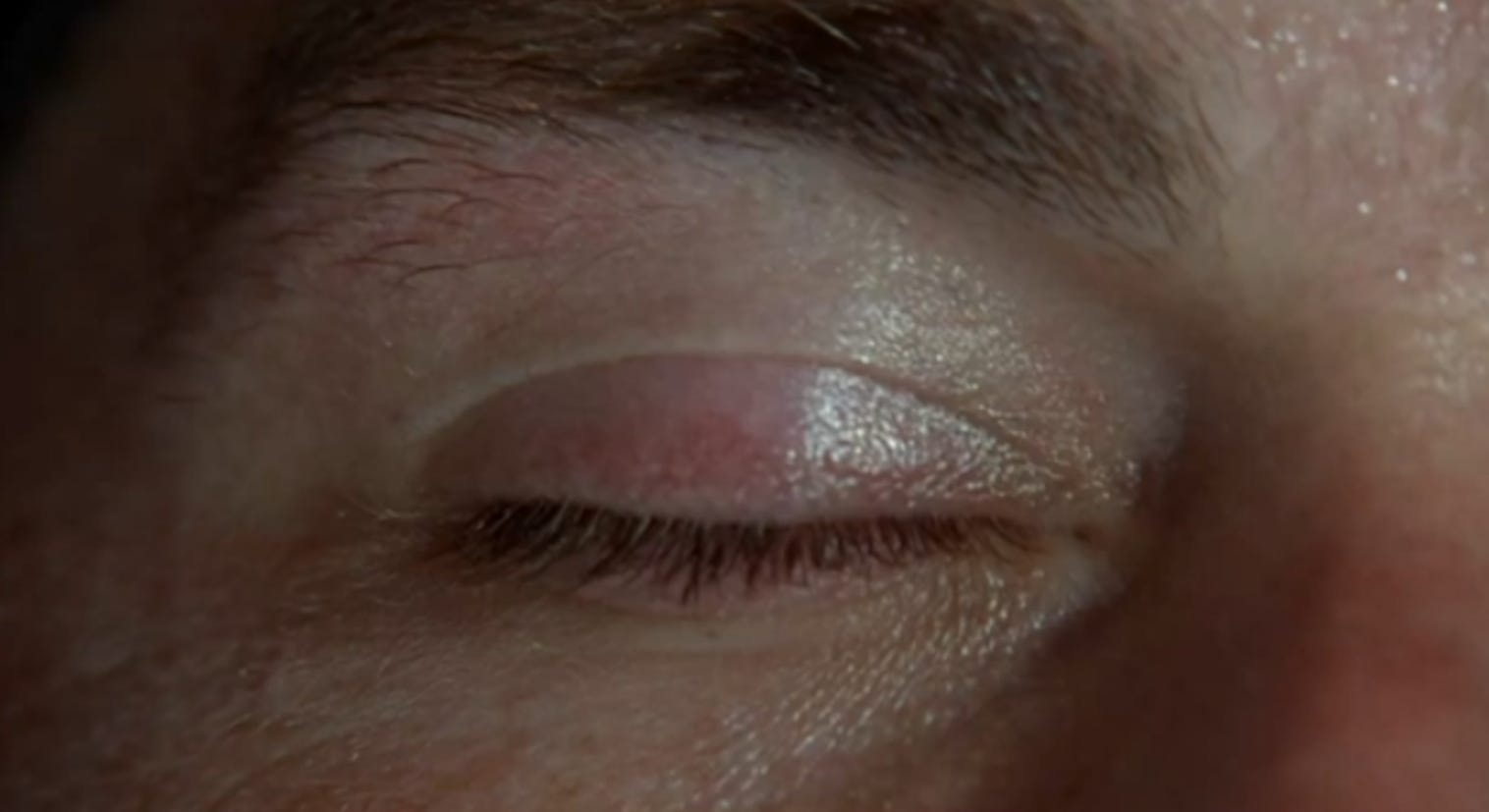
Immediately, as a writer, you should be thinking about what the audience is wondering. Different people will be thinking about different things, but a good guess about the target audience is something like: “Okay… Here’s a guy who’s asleep? Probably? Who is he? Where is he? In bed? Why are we so close to his eye?”
Do not confuse wondering about things with tension! Tension comes from caring about the answers. At this point the audience is trying to orient, but they don’t really care, except in wanting to have a basic sense of what’s happening. We would say that they are not very tense. If the audience picked up their phone, here, it would be understandable.
But then, exactly three seconds after we see the eye, there’s a music sting and the eye snaps open, pupil going from dilated to contracted as the world is reflected on its glossy surface. Something is wrong. The man is afraid.
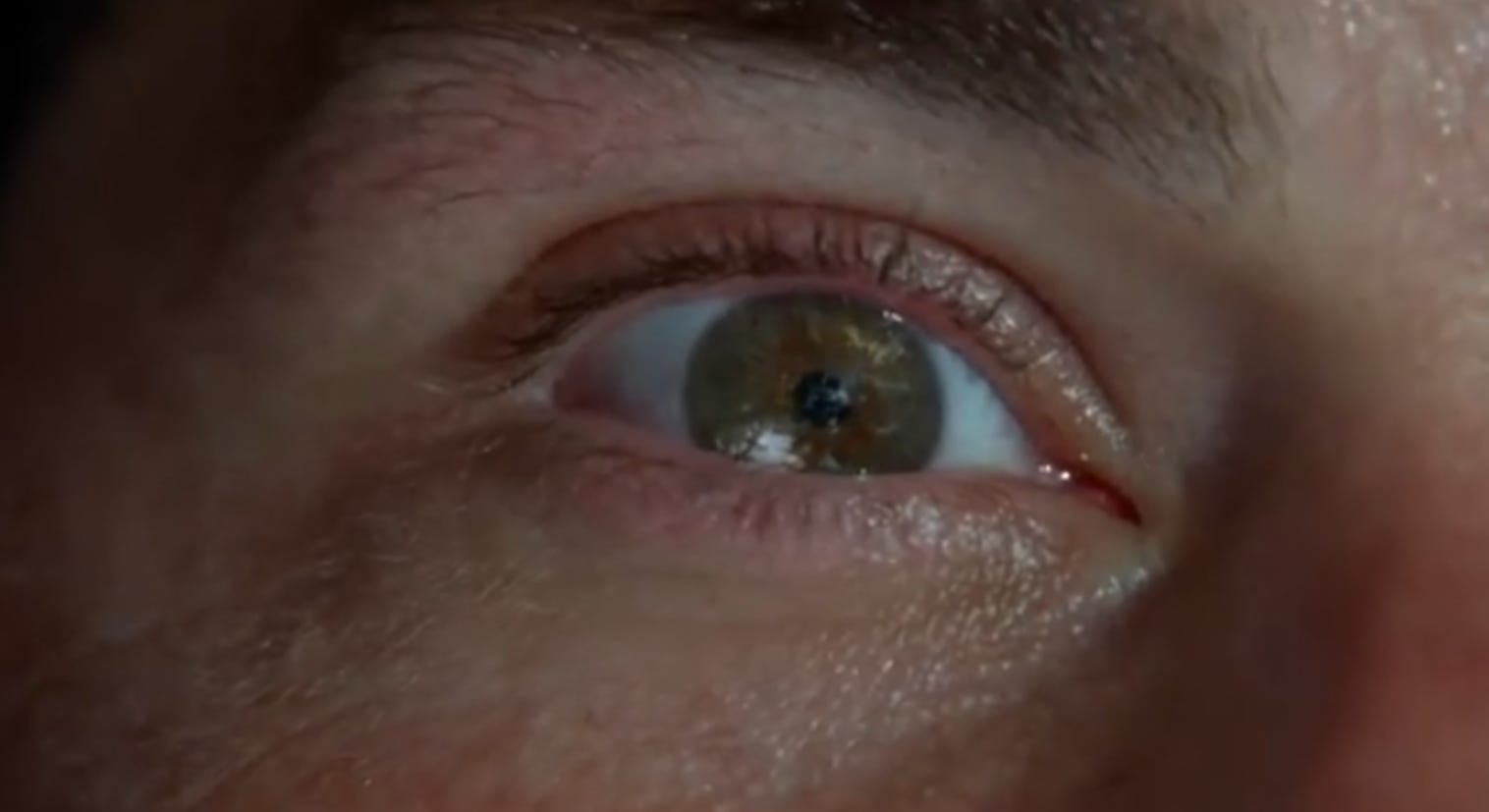
Notice that this moment is a payoff. We get evidence that he’s not in bed. We are learning about what’s happening. As a general rule (which you can sometimes break if you know what you’re doing), every sentence in your work after the first one (and maybe the first sentence, too, if you have a great title) should be a payoff of some kind. The reader needs to learn to trust you, and believe that you’ll answer their questions. You earn that trust by actually answering questions in a satisfying way.
And while Lost really loses this trust in the later seasons, and does not have a satisfying ending, overall, in the first season — and especially the pilot — it’s really good at this. It hands the audience answers at a steady drip, even while piling on questions at an even greater pace.
For example: Why is the man afraid? How does that mesh with him being asleep? Where is he? I can’t really make it out in the reflection on his eye…
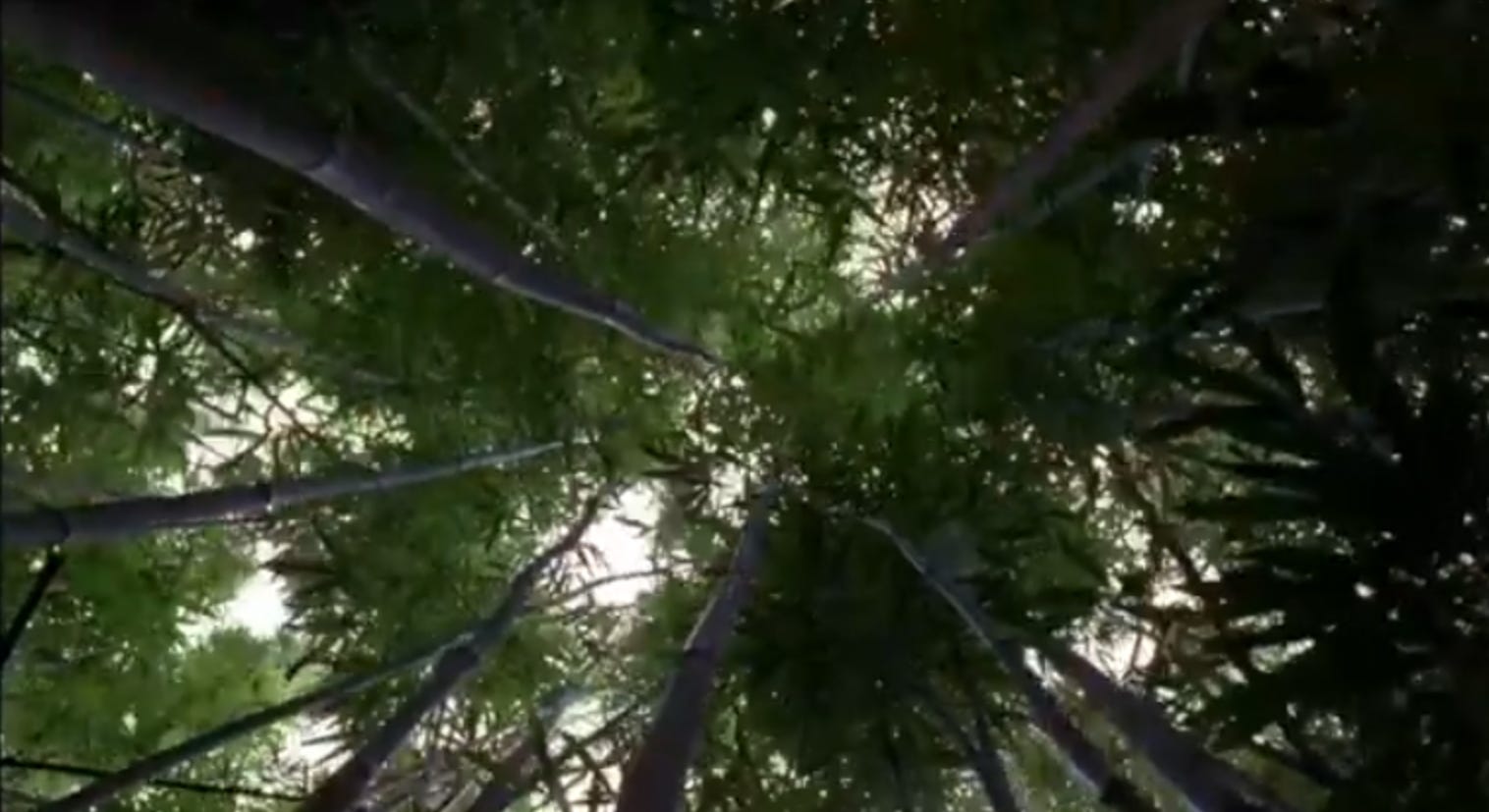
Oh! He’s in the jungle. He’s looking up at some kind of tropical trees, blowing in the wind. In this PoV shot, the music becomes more prominent and eerie. We still don’t know what’s wrong. We see where we are, but we don’t see any threat. By adopting the PoV, we connect with the man. His anxiety is our anxiety. Is something about to jump out and get us?
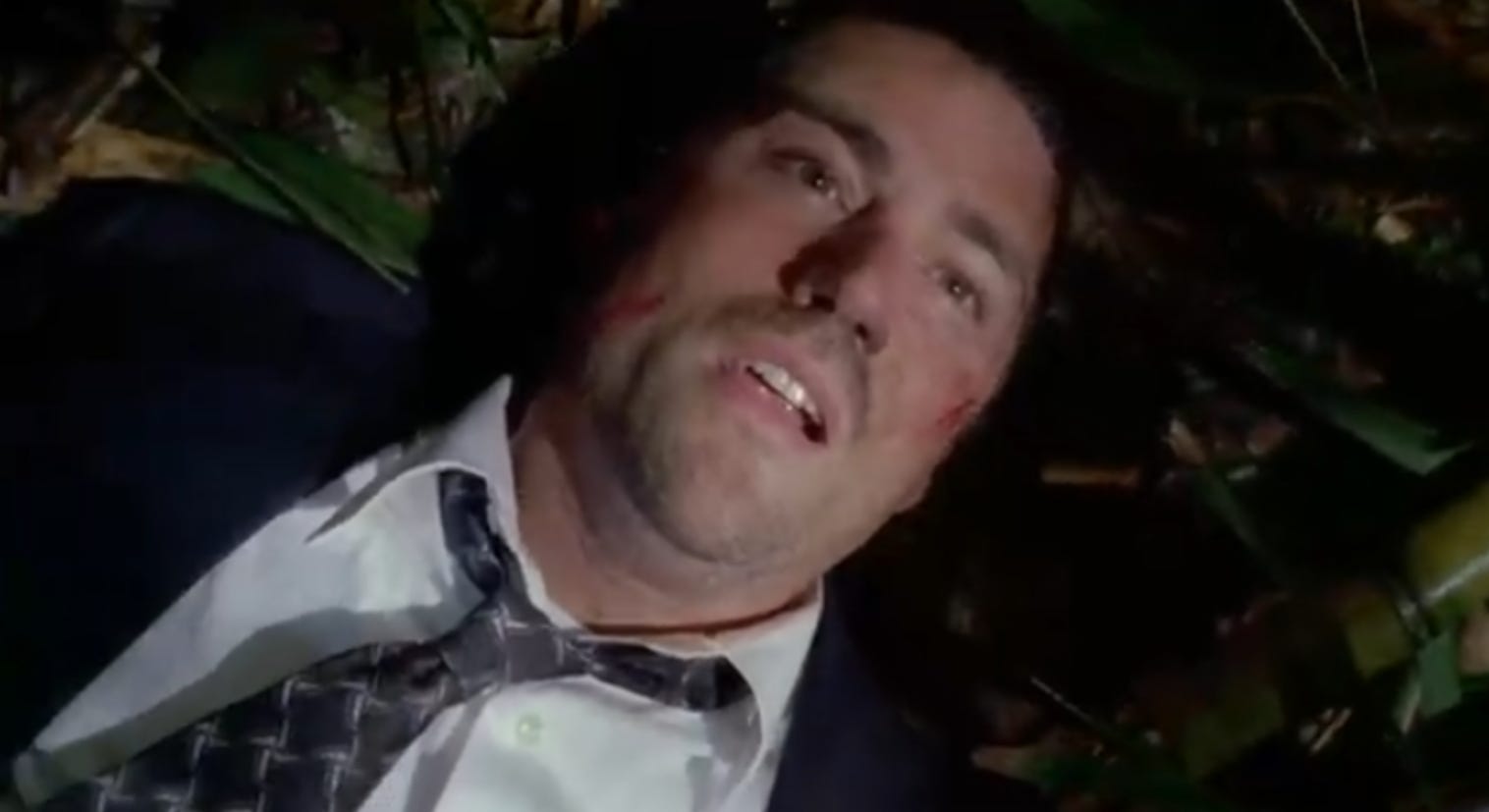
Back to the man. He’s stunned. He’s hurt. He’s… in a business suit? Why is this business man in the jungle? How did he get here? What happened to him? The camera pulls back, lingering above him as he orients. He’s not sure what’s going on either. The music becomes almost beautiful as we watch him recover.
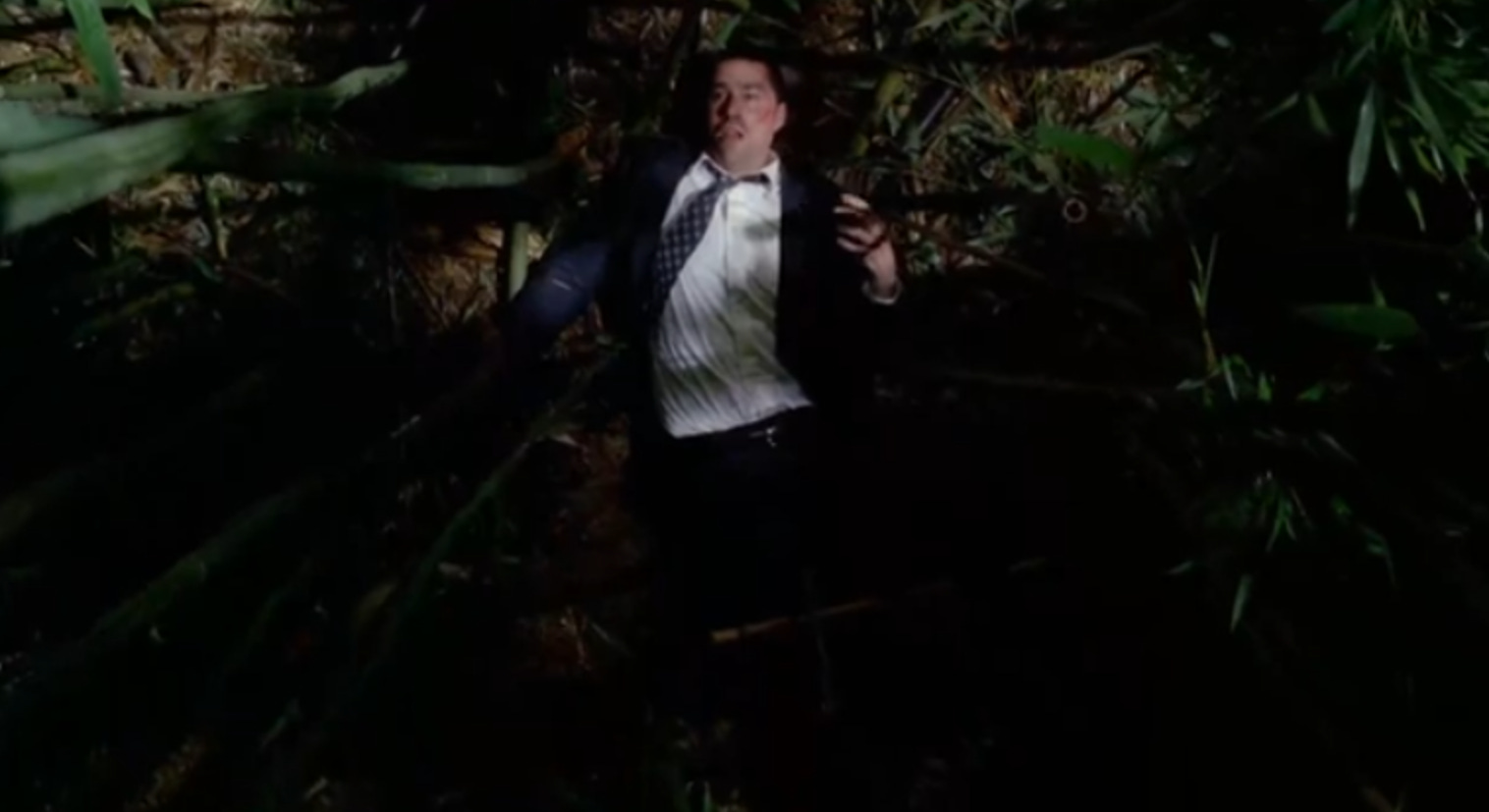
From the start, we spend:
3 seconds on his closed eye
3 seconds on his open eye
[CUT]
5 seconds on the jungle
[CUT]
20 seconds slowly watching him from above
This long moment of pulling back and lingering is important, and simultaneously highlights a common technique for building tension and dodges a common, tension-related pitfall.
The pitfall is being too action-dense, and not letting your reader breathe, digest, processes, and orient. Action is mostly good for answering questions, not asking them. The tensest stories are ones where the audience can tell there is going to be a bunch of action, but it keeps not happening, like a thunderstorm that looms overhead, waiting to release its fury. There is a reason that Alfred Hitchcock, one of the all-time masters of tension, is famous for movies with very little on-screen action.
If you start en medias res, like Lost, you need to make sure to give the reader periods of time to think about what is happening. If you’ve ever read a story with a battle scene that just goes on and on and on, a big part of what’s boring about that is that the author — who spends much longer in writing the scene, often taking multiple breaks between writing sessions — understands what’s going on, but the reader doesn’t have enough time to really get a handle on the events, and so the words go in one eye and out the other, so to speak.
In a screenplay, processing time is literal time. Moments of contemplation, where nobody is talking and the scene is relatively still. In prose it will take the form of revisiting the known facts, and having the characters chew on them both intellectually and emotionally, revisiting what they think and how they feel. As this happens, some answers should fall into place, and some new questions should arise, but mostly it should be about going back over the questions we already have. Who is this? Where is he? What happened to him?
Before moving on from Lost, let’s talk about the technique for building tension that I think this lingering shot uses, and which is a core part of almost all storytelling: empathy. Specifically, we start to care about the man on screen because he is like us. He is confused and disoriented. He is lost.
Again, tension comes from the reader having questions that they care about. You may not care about who this man is when you first see him, but as you and he quietly feel the wind in the jungle, you begin to care for him as an extension of yourself. This works even better as you give your protagonists virtues that the audience cares about having. If your character is intelligent, and the audience wants to be intelligent, they will start caring about your character as an extension of the spirit of intelligence.
Know your audience. Put them on the page.
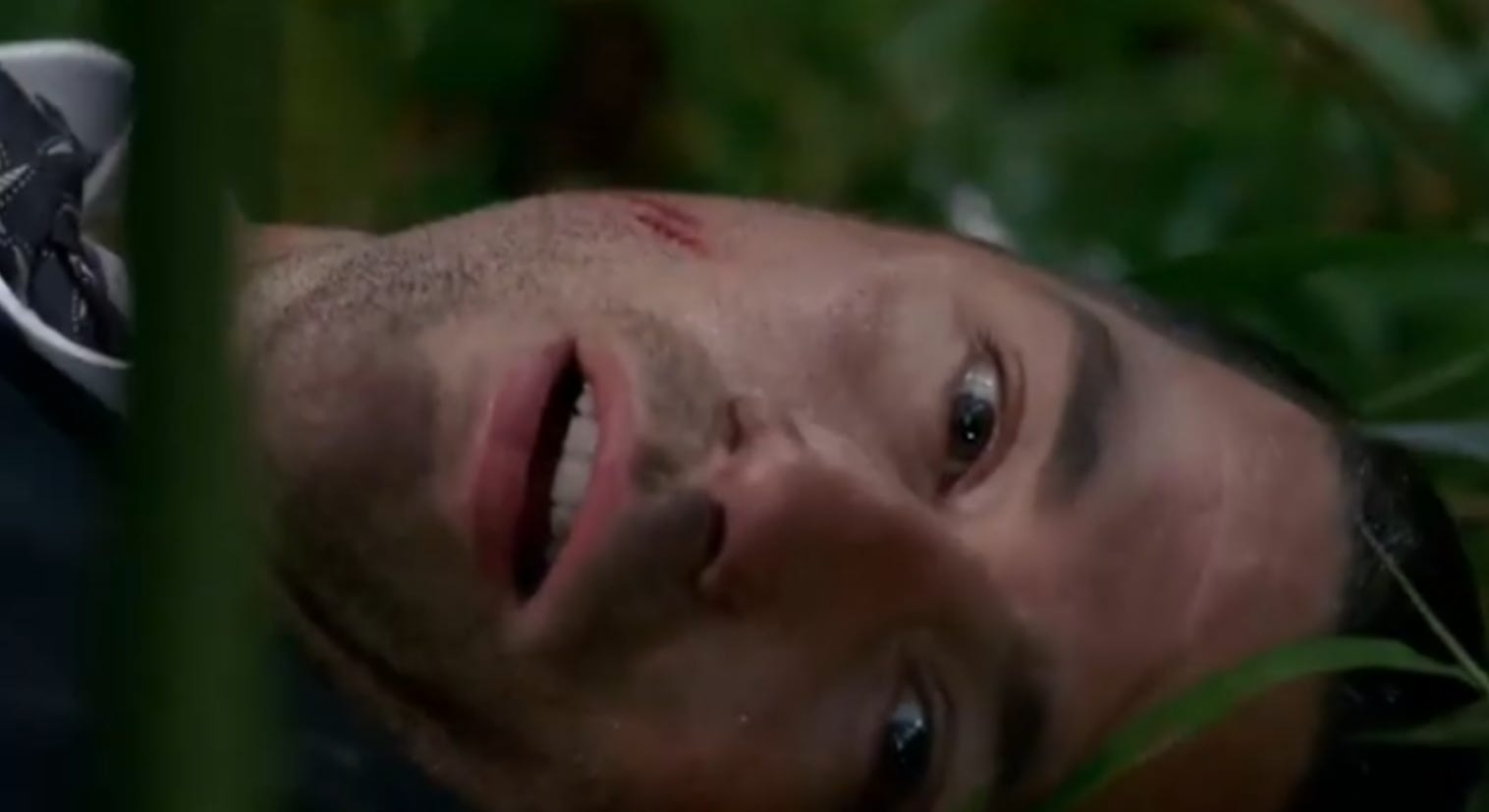
The music stings again as he snaps his head to the side, looking at something with half-focused eyes. What is he looking at? Has he remembered something? What’s out there?
Two steps towards mystery, one step towards comprehension. Set up. Pay off.
Tension in Nonfiction
There are endless examples of masterful control of tension in fiction. Finding Nemo, Death Note, and Pride and Prejudice are all worth studying from this angle. But suppose you write nonfiction? Does tension still apply there?
Yes, of course!
Tension is about your reader wanting and craving to read what you write. The mechanics of tension are often quite different, between fiction and nonfiction, but the underlying principle is the same. Set up. Pay off. Keep raising questions in the process of answering them, until releasing the reader with the climactic synthesis of everything you’ve been building up.
When someone reads your blog, what questions are they trying to answer? Why are they there? Your target audience should be immediately intrigued by the knowledge that you promise them. If you’re writing about which voting systems are best, you should probably start by laying out the stakes. Use what your readers already care about to convince them that voting systems matter. Make them hungry for insight, and only when they are banging down your door demanding to know the secret knowledge that only you can impart, should you impart it.
This doesn’t mean burying the lede. Quite the opposite! It means putting the reason for your essay as early as you possibly can, and putting the answers as early as you can, understanding that it is possible to be too early. Lay the groundwork for your thesis while previewing where you’re going, such that you reach your conclusion at the same time the reader does.
If you need to follow your thesis with clarifications or supporting evidence, motivate them in the same way. Build tension, then release. The pattern is fractal.
Chesterton’s Fence
Let’s end with a counterexample: The Lord of the Rings.
Now, don’t get me wrong, LotR has a lot of masterful use of tension. The films, especially, manage tension in a stellar way. But in the books… Well, here’s how The Fellowship of the Ring starts:
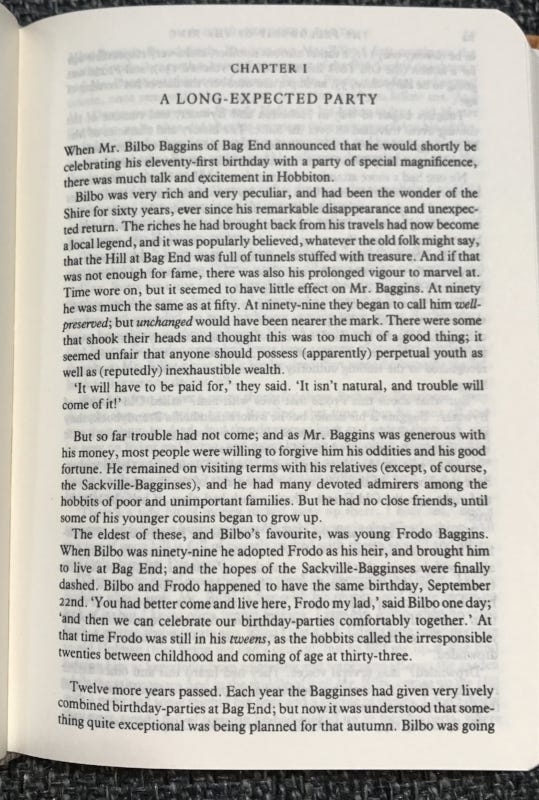
The very beginning is okay. Birthday parties are fun. And it’s of special significance. Neat! Oh, and it’s his “eleventy-first” birthday. Huh! What’s up with that? And he’s “very rich and very peculiar.” (Editor’s note! Avoid unnecessary words!) That could be interesting. And he’s unnaturally… healthy? Uh, okay. Trouble will come of it! Oh!
And then no trouble comes. Bilbo is well-liked. Things are fine. Tolkien is immediately deflating his own tension. Why? Why not emphasize the trouble? Or at least leave the ominous storm cloud a little darker?
Consider, also, this passage from Chapter 3:
The woods on either side became denser; the trees were now younger and thicker; and as the lane went lower, running down into a fold of the hills, there were many deep brakes of hazel on the rising slopes at either hand. At last the Elves turned aside from the path. A green ride lay almost unseen through the thickets on the right; and this they followed as it wound away back up the wooded slopes on to the top of a shoulder of the hills that stood out into the lower land of the river-valley. Suddenly they came out of the shadow of the trees, and before them lay a wide space of grass, grey under the night. On three sides the woods pressed upon it; but eastward the ground fell steeply and the tops of the dark trees, growing at the bottom of the slope, were below their feet. Beyond, the low lands lay dim and flat under the stars. Nearer at hand a few lights twinkled in the village of Woodhall.
The Elves sat on the grass and spoke together in soft voices; they seemed to take no further notice of the hobbits. Frodo and his companions wrapped themselves in cloaks and blankets, and drowsiness stole over them. The night grew on, and the lights in the valley went out. Pippin fell asleep, pillowed on a green hillock.
Away high in the East swung Remmirath, the Netted Stars, and slowly above the mists red Borgil rose, glowing like a jewel of fire. Then by some shift of airs all the mist was drawn away like a veil, and there leaned up, as he climbed over the rim of the world, the Swordsman of the Sky, Menelvagor with his shining belt.
I’m kinda with Pippin. This passage is just as boring, in context.
But despite being boring, I claim that it is good. LotR is full of passages and moments like this, where Tolkien takes time to give unnecessary, unmotivated detail about the texture of the world, the shape of the land, the songs and poetry of the elves, and so on. These moments lose some readers, and understandably so, but they provide mood and contrast to the more gripping sections of the story. When things are dire, and you really care, the hobbits can look back to simpler days when things were boring, and you, the reader, can feel that longing ache alongside them. Oh, to have an uncomplicated birthday! Oh to hear a bit of elven poetry! A threat to the world is made more real by the sense that the world is full of things and people, including many that aren’t relevant to the plot.
Rules are not meant to be broken, but — for writers anyway — they are a reflection of the aspects of quality. Those who have not mastered the path laid out by the rule should consider adhering to it more dogmatically, and only breaking it once they become more skilled.
In writing, like in most things, is a game of tradeoffs. But in my experience, focusing on building and controlling tension is one of the best tradeoffs to steer towards, for novices and professionals alike.
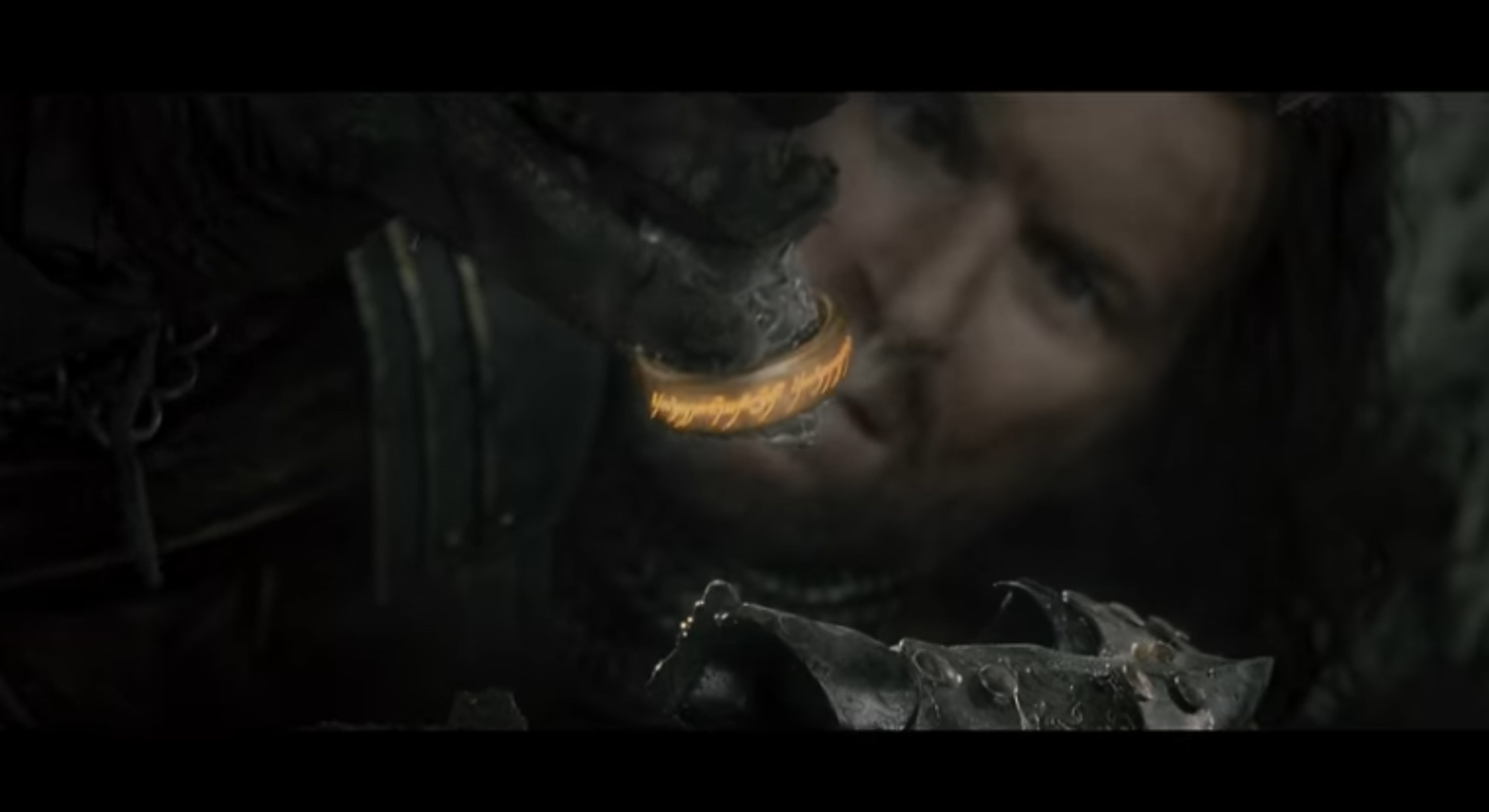
“Episode IV” is even more of a WTF moment. But the episode number was retroactively added after The Empire Strikes Back, so I think it’s less fair to focus on as a “I broke the rules and got away with it” moment, even though it totally is.
And yes, I am aware that the actual first text of the film is “A long time ago in a galaxy far, far away….” and then “STAR WARS”.